
I've spent years designing digital spaces for people to connect, and I keep coming back to the same metaphor: communities are like gardens. You don't build them so much as grow them – providing the right conditions and then stepping back to watch what emerges. Like a gardener, you can plan and plant, but the most beautiful moments often come from unexpected combinations and natural patterns that develop on their own.
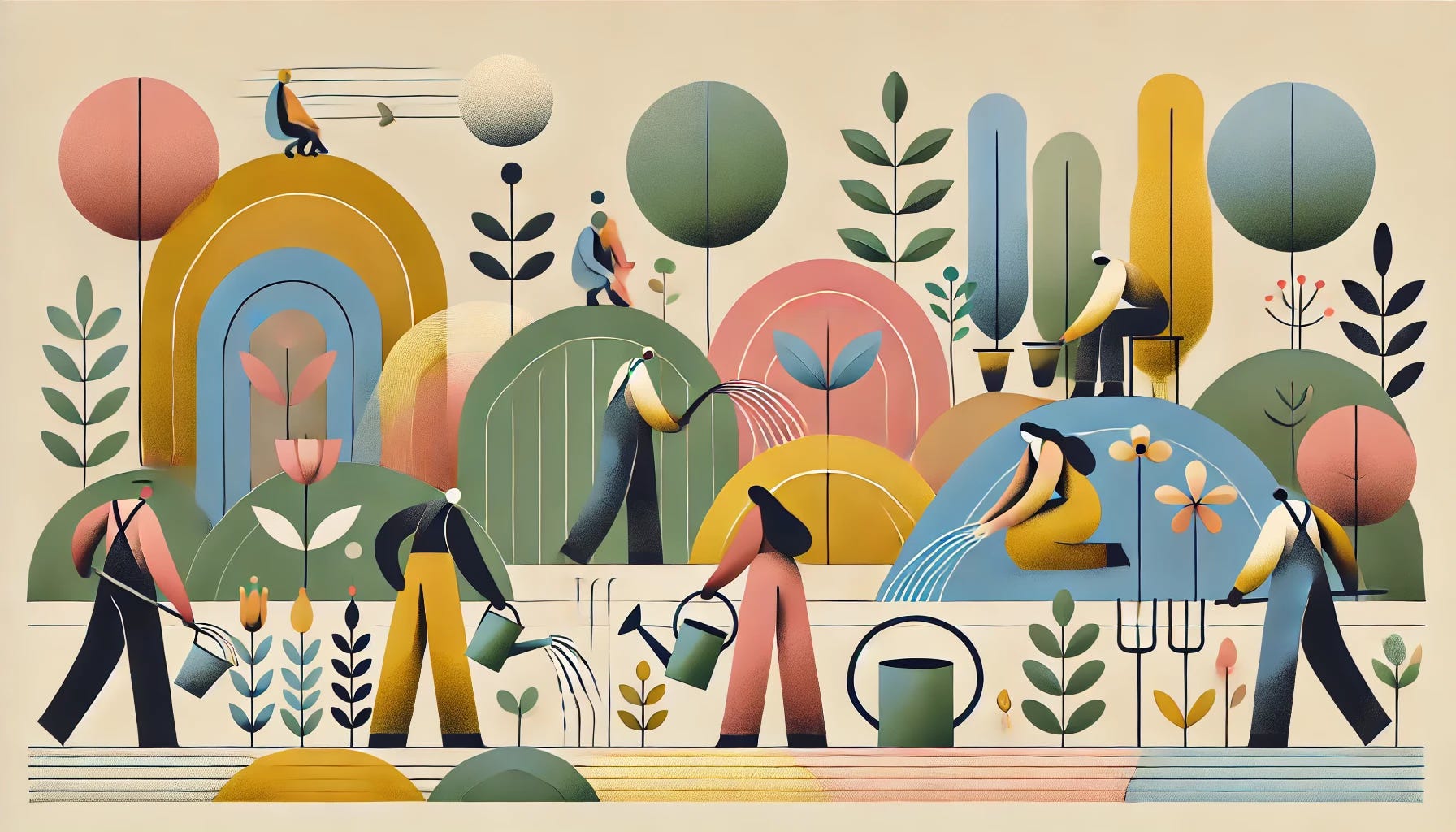
Sometimes a casual conversation sparks a whole new project, just like how a volunteer tomato plant might pop up in the perfect spot you never would have planned. Other times, what you thought would be a centerpiece doesn't quite take root, and that's okay too. The art is in creating spaces that are structured enough to support growth but flexible enough to let organic connections flourish.
This kind of design – where you set up thoughtful conditions but leave room for surprise and adaptation – is what makes communities feel alive rather than artificial. It's about finding the sweet spot between intention and emergence, between careful tending and letting things grow wild.
Here's what I've learned about cultivating these living, breathing digital spaces:
Keep It Cozy with Squad-Sized Groups
The most vibrant conversations and deepest connections happen in smaller groups. When you're working with 5-8 people, everyone can be heard, relationships form naturally, and there's space for real interaction. These smaller units become the building blocks of larger communities. Read more here.
Create Regular Rhythms
Just like a garden needs consistent care, communities need regular tending. This means creating predictable rhythms of gathering – weekly check-ins, monthly show-and-tells, seasonal celebrations. These patterns give people something to look forward to and build their participation around. Read more here.
Make Things Together
The strongest bonds form when people create together. Whether it's collaborative art, shared writing, or group projects, the act of making something as a team creates lasting connections. This shared creative process becomes the "bonding glue" that holds communities together.
Design for Safety
People need to feel safe to experiment, share vulnerably, and be themselves. This means thoughtfully designing spaces with clear expectations, responsible moderation, and room for both public and private interactions. When people feel secure, they're more likely to take creative risks and form meaningful connections.
Build Trust Progressively
Trust isn't built overnight. Design your community experience as a gradual journey, where people can slowly increase their involvement and vulnerability as they feel ready. Start with low-stakes interactions and create clear paths toward deeper engagement.
Celebrate Together
Don't forget to stop and celebrate what your community creates! Regular moments of appreciation and recognition help people feel valued and reinforce the joy of being part of something bigger than themselves.

These six key ingredients – squad-sized groups, regular rhythms, making together, safety, progressive trust, and celebration – work together like a well-balanced soil, creating an environment where genuine connections can grow organically.
Just as different crops need different soil conditions – some thriving in sandy loam, others in rich clay – communities need to be cultivated to welcome diverse voices and ideas. The key is preparing the ground to be hospitable to many types of growth while maintaining the core nutrients that support all life: safety, trust, and shared purpose.
Like any garden, each community will develop its own unique character based on who shows up and what they create together. Some might be like herb gardens, intimate and intensely flavorful. Others might grow into sprawling permaculture systems, with different species supporting each other in unexpected ways.
What's beautiful about this approach is that it works at any scale. Whether you're tending a small creative plot or nurturing a vast community ecosystem, these principles help create the conditions for authentic relationships to flourish. The soil you prepare today becomes the foundation for tomorrow's growth.

This post is the first in a series exploring each of these community ingredients in depth. Over time, I'll share detailed stories and practical approaches for working with each element:
Facilitating collaborative creation that strengthens bonds
Building psychological safety in digital spaces
Designing progressive trust-building experiences
Cultivating a culture of meaningful celebration
I'd love to hear your thoughts as we explore each ingredient. What patterns have you noticed in the communities you're part of? What elements would you like to learn more about?
Subscribe to follow along as we dig deeper into the art and science of growing digital communities.